JillLebofsky may earn a commission if you buy through links on this page, at no extra cost to you. That does not change what we report.
Part of our ProNail Complex overview. Last checked November 6, 2026.
ProNail Complex ingredients are 17 items on the bottle label: undecylenic acid USP at 5%, the only one with an amount, plus 16 carrier and essential oils at undisclosed amounts[1]. Undecylenic acid appears in OTC athlete's foot products, and tea tree oil has one toenail trial. The rest are carrier oils, vitamin E or essential oils with lab data only.
ProNail Complex ingredients at a glance
Only 1 of the 17 ingredients has a stated amount, and only 2 have human antifungal trials. The table follows the label order we read on November 6, 2026; grades come from our evidence cards and refer to nail or skin fungus use.
| Ingredient | Role | Amount disclosed? | Evidence grade |
|---|---|---|---|
| Undecylenic acid USP | Antifungal active | Yes, 5% | Weak for nails, moderate for foot skin at 10% to 25% |
| Tea tree oil | Antifungal essential oil | No | Limited |
| Manuka oil | Essential oil (vendor: "more powerful than tea tree oil") | No | Weak |
| Clove bud, lemongrass, lavender oils | Essential oils | No | Weak (lab data only) |
| Camphor oil, menthol | Cooling, aromatic | No | Weak for nails |
| Organic flaxseed oil | Carrier (vendor: nails "grow back immediately") | No | None (vehicle) |
| Mineral, sweet almond, canola, walnut, jojoba, chia oils | Carriers | No | None (vehicle) |
| Aloe vera leaf extract, tocopheryl acetate | Soothing additive, antioxidant | No | None (vehicle) |
What is in each ingredient, and what does research say?
Each ingredient below gets the human trials we could match, the strengths studied and how they compare with the label. Undecylenic acid and tea tree oil carry most of the weight.
Undecylenic acid USP (5%)
Undecylenic acid is a fatty acid used in OTC antifungal creams and powders. In older skin trials, a powder with 2% acid and 20% zinc undecylenate gave 88% negative cultures against 17% for placebo after 4 weeks of athlete's foot use[2], and an ointment matched 1% tolnaftate[3].
Those products held about 22% total undecylenate. FDA's OTC antifungal rule sets 10% to 25% for skin (21 CFR 333.210), and ProNail Complex states 5%. No randomized nail trial exists, and OTC 25% solutions penetrated human nail poorly in a lab test[4].
Tea tree oil
Tea tree oil is the best studied oil in the bottle. In a double-blind trial of 117 culture-proven toenail cases, 100% oil twice daily for 6 months with nail filing cleared fungus on culture in 18%, against 11% for 1% clotrimazole, with no placebo group[5].
On athlete's foot skin, 25% and 50% solutions cleared fungus in 64% (50% strength) against 31% for placebo[6]. NCCIH says nail research is too thin for conclusions[7]. ProNail Complex does not state its tea tree share.
Manuka oil
Manuka oil comes from Leptospermum scoparium. The sales page leaves it out, while the label lists it. A 118-adult trial of a 2% manuka cream for eczema found no difference from the base cream after 6 weeks[8]. Its antifungal data are from lab dishes. No study supports the vendor's claim that it beats tea tree oil[9].
Camphor oil and menthol
Both give a cooling feel. The only nail data come from a mentholated ointment containing both: in an uncontrolled 18-person series, 27.8% cleared after 48 weeks[10]. FDA lists camphor and menthol among topical antifungal ingredients with inadequate data (21 CFR 310.545). Camphor is dangerous if a child ingests it[11].
Clove bud, lemongrass and lavender oils
Clove oil damaged Candida and dermatophyte membranes in lab tests[12]. Lemongrass oil has only lab and formulation studies. NCCIH says lavender needs more high-quality research for any use[13]. None has a human nail trial.
Vitamin E, aloe and the carrier oils
Tocopheryl acetate is a form of vitamin E that works here as an antioxidant. Aloe vera is a soothing additive. Mineral, sweet almond, flaxseed, canola, walnut, jojoba and chia oils are the vehicle that spreads the actives. A 2022 systematic review of complementary nail therapies found no studies of any of these carriers[14], and the vendor's flaxseed claim has no study behind it.
How transparent is the ProNail Complex formula?
The formula is partly transparent: every ingredient is named, but only one has an amount. Undecylenic acid takes 5%, so the other 16 ingredients share the remaining 95% in proportions the label does not give.
That gap matters most for tea tree oil, where trials used 25% to 100%, and for camphor, where the amount decides how risky an accidental sip is for a child. A 30 ml bottle at 5% holds about 1.5 ml of undecylenic acid; nothing else can be calculated.
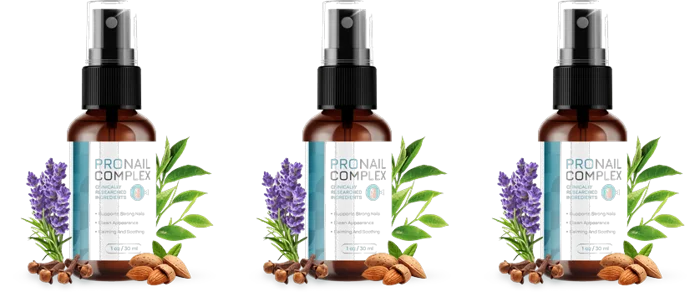
The sales page lists 16 ingredients and drops manuka oil. We go by the bottle label, which lists 17, as read on November 6, 2026[1]. If you buy, compare the label on your bottle with this list, since vendors can change formulas without notice.
Ingredient safety and interactions
The main risks are skin irritation and allergy. In the 25% and 50% tea tree trial, 3.8% of users developed moderate to severe dermatitis[6], and tea tree and lavender lead essential oils as causes of allergic contact dermatitis in a French case series[15].
- Sweet almond and walnut oils come from tree nuts: ask a clinician first if you have a tree-nut allergy.
- Camphor and tea tree oil are harmful if ingested: keep the bottle away from children.
- The label says external use only, avoid eyes, do not ingest, and stop if irritation occurs.
Our ProNail Complex side effects guide lists who should ask a doctor first.
Do these ingredients prove ProNail Complex works?
No. Ingredient research shows some of these compounds act on fungus in lab dishes or on foot skin at strengths and amounts that differ from this spray. None of the studies tested ProNail Complex, and none showed undecylenic acid clears toenail fungus.
The label backs this up by claiming only "Supports Strong Nails". Our does ProNail Complex work guide sets each sales claim against the studies, and the application guide covers the label directions.
Back to the ProNail Complex overview.
Frequently asked questions
What is the active ingredient in ProNail Complex?
Undecylenic acid USP at 5% is the only ingredient with a stated amount. It is a fatty acid found in OTC athlete's foot products, though FDA's OTC rule sets 10% to 25% for skin use, above this spray's 5%.
Is ProNail Complex an anti fungal formula?
The label claims only Supports Strong Nails. It contains undecylenic acid and tea tree oil, which have antifungal activity on skin, but the spray itself has never been tested on nail fungus in a published study.
Does ProNail Complex contain nut oils?
Yes. The label lists sweet almond oil and walnut oil, both from tree nuts. People with a tree-nut allergy should ask a doctor or pharmacist before putting the spray on their skin.
How much tea tree oil is in ProNail Complex?
The label does not say. Tea tree oil is one of 16 ingredients sharing 95% of the formula with no amounts given. The main toenail trial used 100% tea tree oil twice daily for 6 months.
Why does the sales page list 16 ingredients and the label 17?
The sales page leaves out manuka oil, which the bottle label includes. We go by the label as read on November 6, 2026, and suggest checking the label on any bottle you receive.
Sources
- ProNail Complex text presentation (sales page, label image and FAQ). thepronailcomplex.com, read November 6, 2026.
- Undecylenic acid and zinc undecylenate powder for tinea pedis, placebo-controlled trial (PMID 6987185). PubMed, read November 6, 2026.
- Undecylenic acid ointment vs tolnaftate cream vs placebo in tinea pedis (PMID 6991217). PubMed, read November 6, 2026.
- Ex vivo nail penetration of OTC undecylenic acid and tolnaftate solutions vs efinaconazole (PMID 39133361). PubMed, read November 6, 2026.
- Tea tree oil vs clotrimazole for toenail onychomycosis, double-blind multicenter trial (PMID 8195735). PubMed, read November 6, 2026.
- Tea tree oil 25% and 50% solutions for interdigital tinea pedis, placebo-controlled trial (PMID 12121393). PubMed, read November 6, 2026.
- Tea Tree Oil. National Center for Complementary and Integrative Health (NIH), read November 6, 2026.
- Manuka oil 2% cream for eczema, pharmacy-based randomized trial (PMID 41629897). PubMed, read November 6, 2026.
- Contact us and FAQ. thepronailcomplex.com, read November 6, 2026.
- Mentholated ointment for onychomycosis, case series (PMID 21209346). PubMed, read November 6, 2026.
- Camphor toxicity, poison-center data and review (PMID 15219304). PubMed, read November 6, 2026.
- Antifungal activity of clove oil and eugenol against Candida, Aspergillus and dermatophytes (PMID 19589904). PubMed, read November 6, 2026.
- Lavender. National Center for Complementary and Integrative Health (NIH), read November 6, 2026.
- Systematic review of complementary therapies for onychomycosis, 2022 (PMID 35983465). PubMed, read November 6, 2026.
- Allergic contact dermatitis from essential oils, 42-patient case series (PMID 37403438). PubMed, read November 6, 2026.
This page is general information, not medical advice. Dietary supplements are not reviewed by the FDA for safety or effectiveness before they are sold and are not intended to diagnose, treat, cure or prevent any disease. Talk to your doctor before taking any supplement, especially if you are pregnant, nursing, take medication or have a health condition.